Temple Ruins of Guchengcun
Introduction
The Temple Ruins of Guchengcun, located in Hunchun, Jilin province, have been recognized as one of the top 10 archaeological finds of 2022. This site has garnered significant attention due to its historical significance and the wealth of artifacts unearthed during excavations. The ruins, dating back to the 5th century, offer valuable insights into the Buddhist cultures of the ancient states of Gaogouli (Goguryeo) and Bohai (Balhae).
History
Early Period
The Temple Ruins of Guchengcun trace their origins back to the 5th century, during the reign of Gaogouli (37 BC-668 AD). This period marked the establishment of one of the earliest Buddhist temples in Northeast China, reflecting the spread of Buddhism beyond the Central China Plains. The temple served as a cultural and religious hub, facilitating exchanges between Gaogouli and other regions influenced by Buddhist traditions. The discovery of the No 1 temple at this site is particularly significant, as it is the first Gaogouli Buddhist temple ever found in China.
Significant Events
During its history, the site witnessed significant developments in the spread and evolution of Buddhism in the region. The No 2 temple, dating back to the Bohai state (698-926), played a crucial role in the study of temple layouts and architectural structures during the Tang Dynasty (618-907). It also provided insights into the Sarira burial system, a practice that became integral to ancient Chinese Buddhism. These findings have contributed to understanding the cultural and religious dynamics of the region during these historical periods.
Architecture
Structural Features
The architectural features of the Temple Ruins of Guchengcun are characterized by their unique combination of religious and cultural elements. The temples' structures demonstrate a blend of local and Central China influences, evident in the design and construction techniques. The temples were constructed using locally available materials, and the layout reflects the standard Buddhist temple architecture of the time, including prayer halls, courtyards and pagodas.
Architectural Style
The architectural style of the Guchengcun temples is indicative of the Buddhist influence in the region during the Gaogouli and Bohai periods. The temples exhibit elements typical of early Chinese Buddhist architecture, such as symmetrical layouts, decorated eaves and intricate carvings. These stylistic features highlight the transmission and adaptation of Buddhist architectural traditions from the Central China Plains to the border regions, showcasing a cultural synthesis that enriched the local architectural heritage.
Archaeological Discoveries
Excavations at the Temple Ruins of Guchengcun have provided archaeologists with a wealth of information about the site's past. Systematic excavations have revealed the foundation of multiple temple buildings, along with evidence of their construction phases and modifications over time. The archaeological work has been instrumental in piecing together the history of the site and understanding its significance within the broader context of Northeast Asian Buddhism.
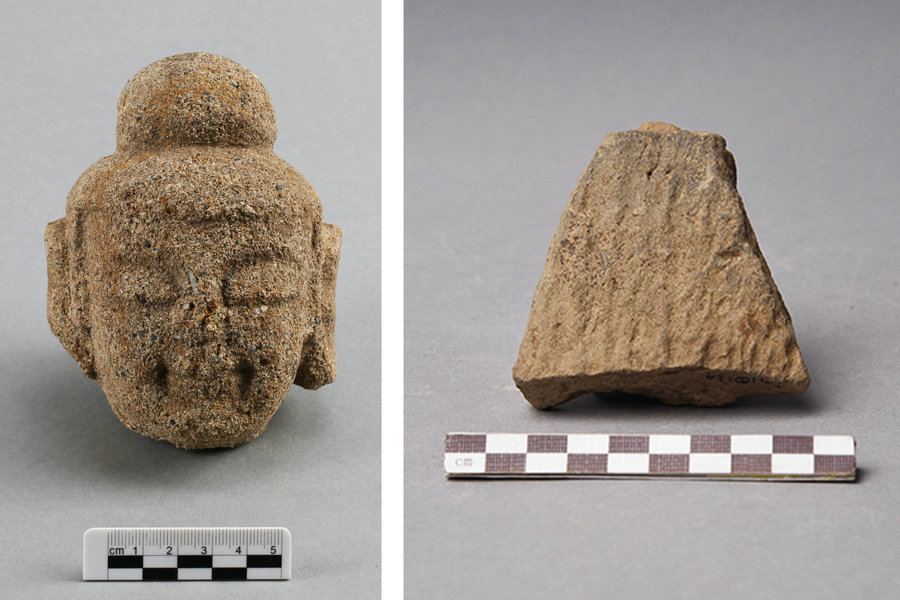
The artifacts discovered include Sarira, Buddhist statues and architectural components, each contributing to the understanding of the site's religious and cultural significance. The Sarira, in particular, are revered relics thought to contain the remains of Buddhist spiritual masters, offering insights into the burial practices and religious beliefs of the time. The statues and architectural components further illustrate the artistic and spiritual activities that once took place at the temple complex.
Cultural Significance
The cultural significance of the Temple Ruins of Guchengcun lies in its role as a center of Buddhist culture in Northeast China during the Gaogouli and Bohai periods. The site's historical importance is underscored by its inclusion in China's top 10 archaeological discoveries of 2022. It offers a unique window into the religious practices, architectural innovations, and cultural exchanges that occurred in the region more than a millennium ago.
The influence of the Guchengcun temples on local culture is evident in the spread of Buddhist ideas and practices across the region. The temples served as a focal point for religious gatherings and cultural interactions, fostering a rich exchange of ideas and traditions. This cultural legacy has left a lasting impact on the region, contributing to the historical and spiritual heritage of Jilin province.
Conservation Efforts and Challenges
Conservation efforts at the Temple Ruins of Guchengcun have been undertaken to preserve the site's historical integrity and ensure its longevity for future generations. These initiatives involve the stabilization of the remaining structures, documentation of the site, and protection against environmental and human threats. Collaborative efforts between local authorities and cultural heritage organizations have been crucial in implementing effective preservation strategies.
Challenges in conserving the Temple Ruins of Guchengcun include environmental degradation, lack of resources, and the need for specialized expertise in restoration techniques. Solutions to these challenges have involved securing funding for conservation projects, engaging in international collaboration, and employing advanced technology to monitor and protect the site.








